
Why shaving a double-coated dog backfires
It is the most reasonable-sounding request we turn down. The dog is panting, the fur is everywhere, summer is coming, and taking it off looks like kindness. It is not, and the reason is in how the coat is built.
Two coats doing two jobs
A double-coated dog has a soft, dense undercoat and a layer of longer, coarser guard hairs over the top. The undercoat is insulation: it traps a layer of air that stays cooler than the air outside in summer and warmer in winter. The guard hairs shed water, block sun, and keep grass seeds and biting insects off the skin.
Shave it and you take both. What is left is skin with a fuzz of undercoat on it, exposed to sun it has never met, with no air layer to sit behind. Most owners notice the dog seeking shade more, not less.
The part that does not grow back
Guard hairs grow slowly and undercoat grows fast. After a shave the undercoat comes back first and thickest, and in older dogs the guard coat sometimes never fully returns. You end up with a woolly, matting coat where a weatherproof one used to be, and the dog sheds more, not less.
Groomers call it coat funk or post-clipping alopecia. It is not universal, but you cannot tell in advance which dog it will happen to, and it is not reversible.
What actually helps
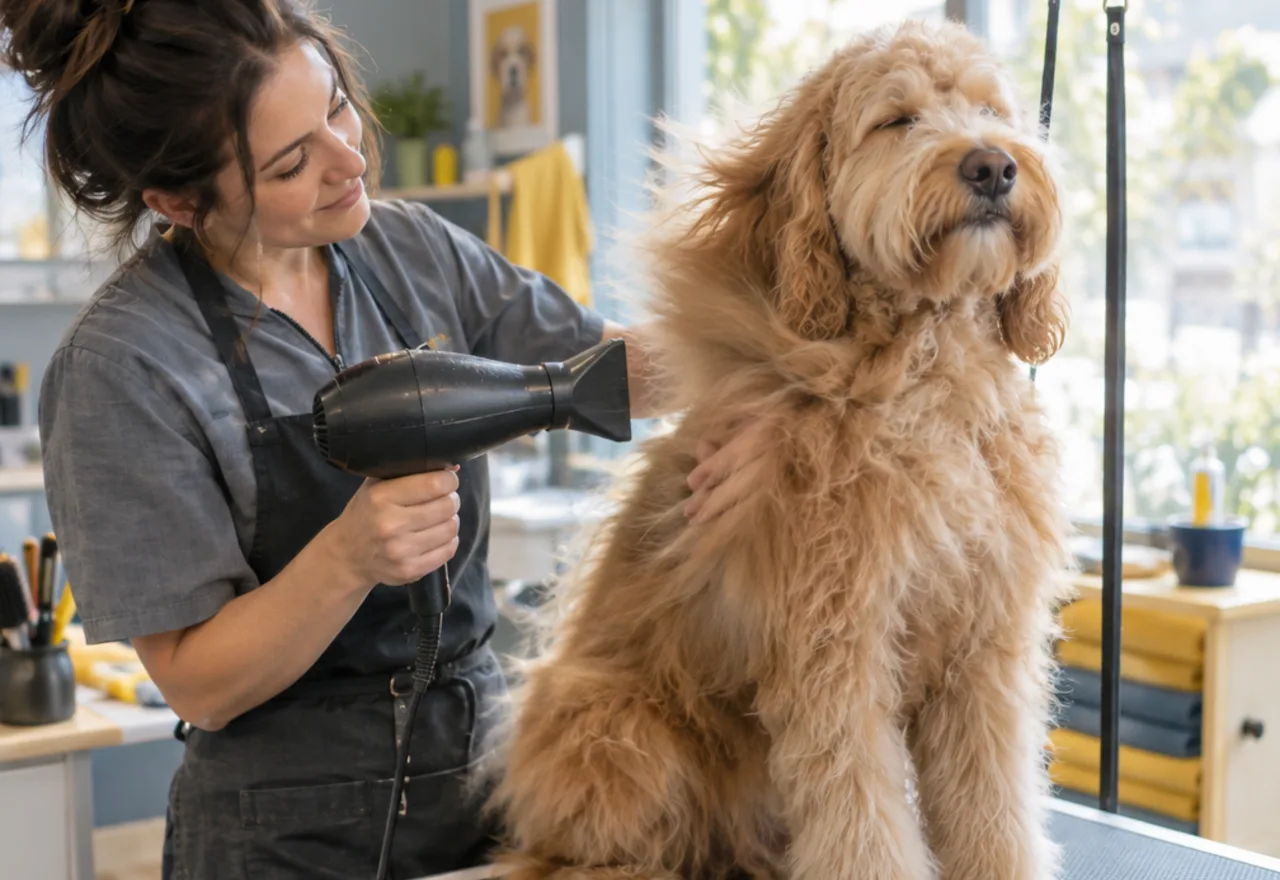
A de-shedding groom takes the dead undercoat out and leaves the working coat in place. It is a long bath in a loosening shampoo, a high-velocity dry that blows the loose hair out from the skin, then a rake and a comb through every layer. A big shepherd will fill a bin bag.
The dog comes out of it cooler, because the trapped dead hair was the problem, not the coat. Your house gets cleaner for about six weeks. And the coat still does its job.
What we will trim
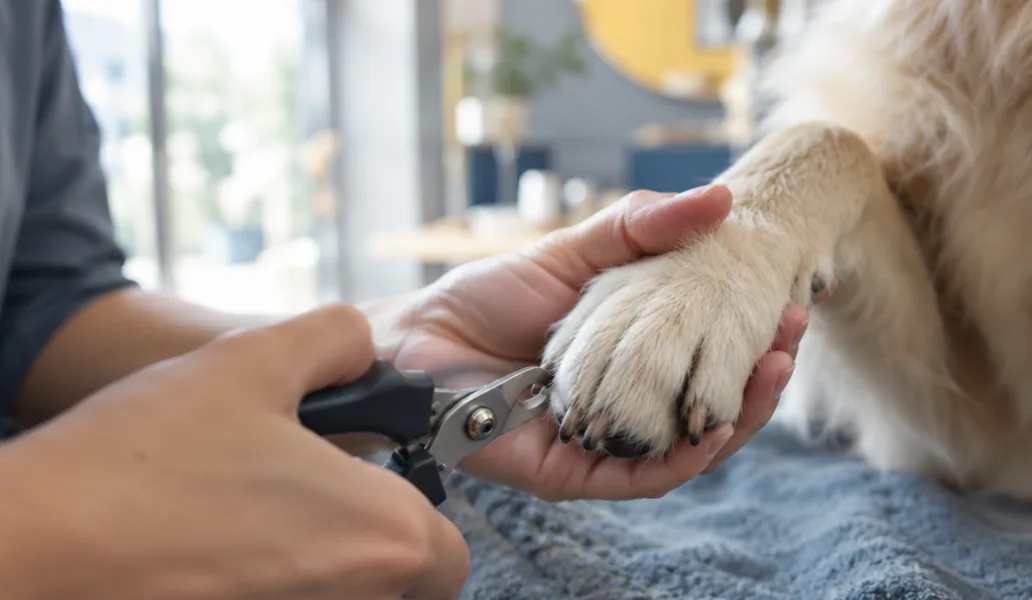
Feet, hocks, the sanitary area, and the feathering behind the legs if it is dragging. Those are tidy-ups that do not touch the insulation.
If your vet has asked for a clip — for a skin condition, surgery, or a dog that genuinely cannot be kept on top of — we will do it, and we will tell you what to expect afterwards. Otherwise, book the de-shed and keep the coat.