
Brushing a long-haired cat without a fight
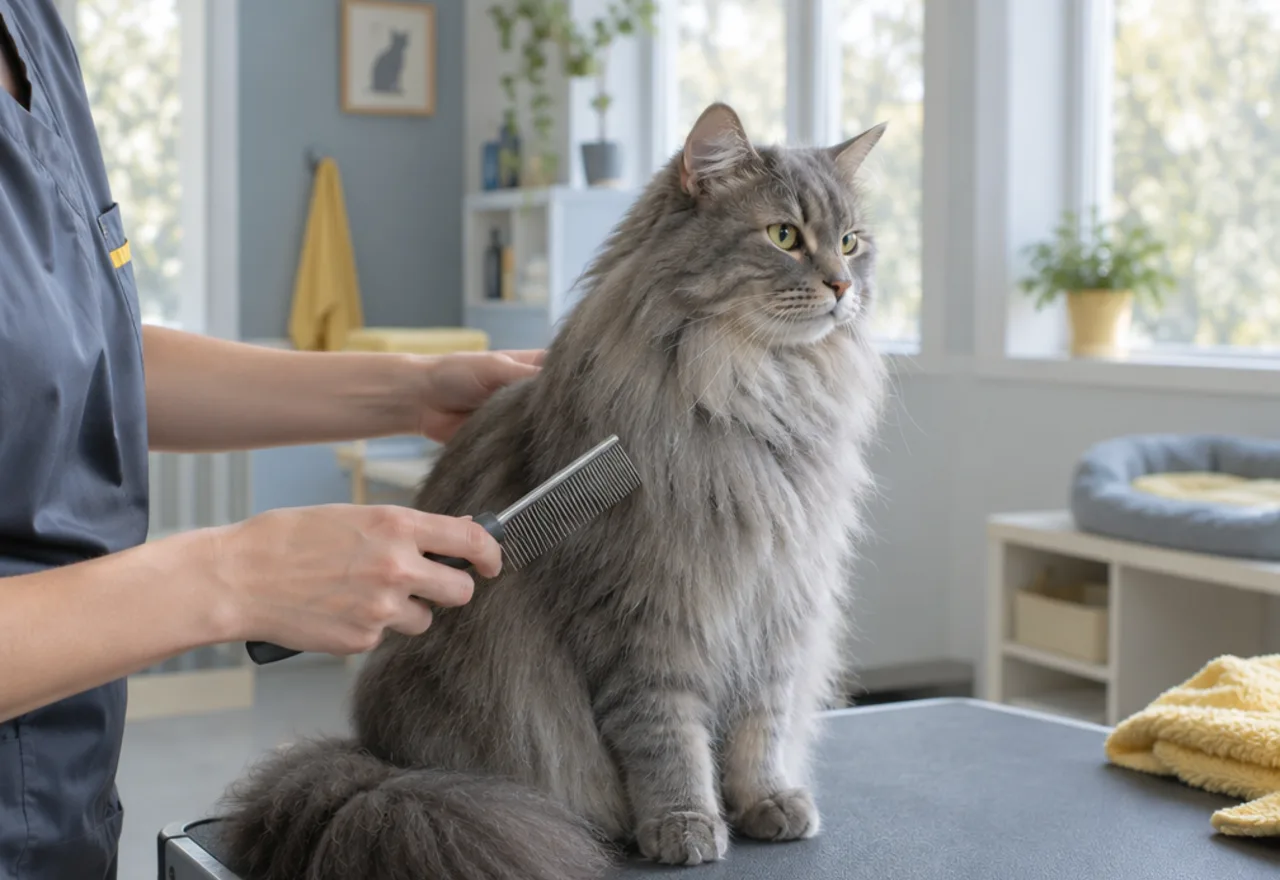
Most people assume a cat handles its own coat. A short-haired one largely does. A persian, a maine coon or a long-haired moggy does not, and the difference matters, because a cat will not limp or whine about a mat. It will simply stop letting you touch that side.
Where to look
Armpits, belly, the back of the thighs, and the base of the tail. Those are the four places a cat cannot reach well with its own tongue, and the four places mats start. Run a hand — not a brush — over them once a week. A mat feels like a knot of felt sitting on the skin, and it will move with the skin rather than with the coat.
The brushing that works
Short and often beats long and thorough. Two minutes a day, while the cat is already settled on you, is worth far more than a twenty-minute session that ends badly.
- Use a steel comb, wide teeth first, then fine. Slicker brushes skim over a cat coat and tug at the ends.
- Work with the lie of the coat, in short strokes, from the skin out.
- Start on the back and shoulders, where nothing is sensitive, and end on the belly if you get that far. If you do not get that far today, stop.
- Finish before the tail starts flicking, not after.
What not to try at home
Never cut a mat out with scissors. Cat skin is thin, loose and lifts into the blades — it is the single most common serious injury we see in cats, and it usually needs stitching.
Never bathe a matted cat either. Water tightens a mat into a solid lump against the skin.
When to bring them in
If the comb catches and will not pass, book it. We groom cats on quiet mornings, by appointment only, in a back room with no dogs on the floor — the noise is half of what makes a salon frightening for them. Light matting comes out with a comb, charged by the quarter hour. A pelted coat gets clipped short under the mats, which is quick, painless and grows back.
Bring the vaccination record for the first visit, same as the dogs.