
Getting a puppy ready for its first groom
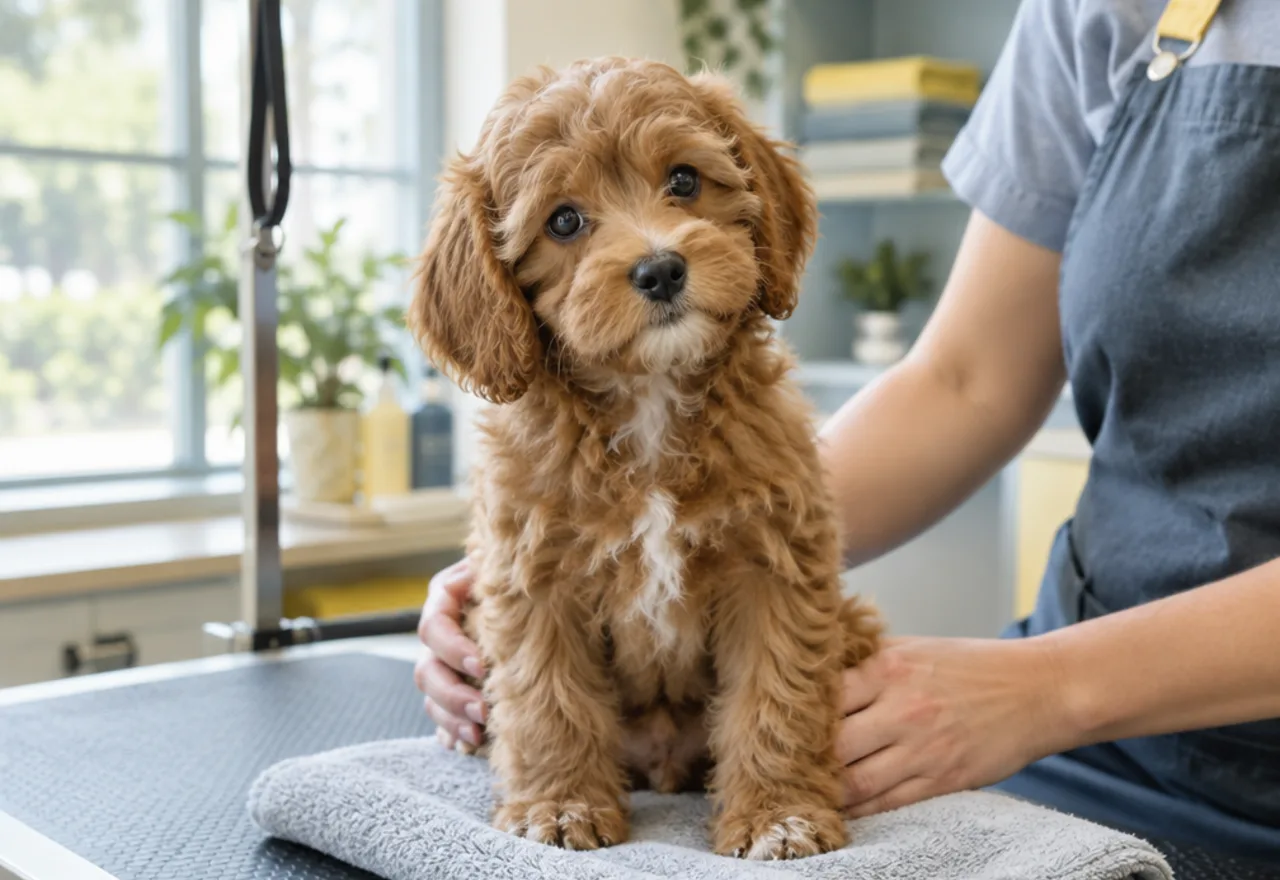
A dog that finds grooming frightening at six is almost always a dog whose first few visits went badly. The reverse is true too, and it is easier than people expect: most of the work happens at home, in one-minute pieces, before the dog ever comes to us.
When they can come in
Two weeks after the second vaccination, which for most puppies means twelve to fourteen weeks. Bring the vaccination card to the first visit, or email us a photo of it beforehand — we check it once a year for every dog and cat on the books.
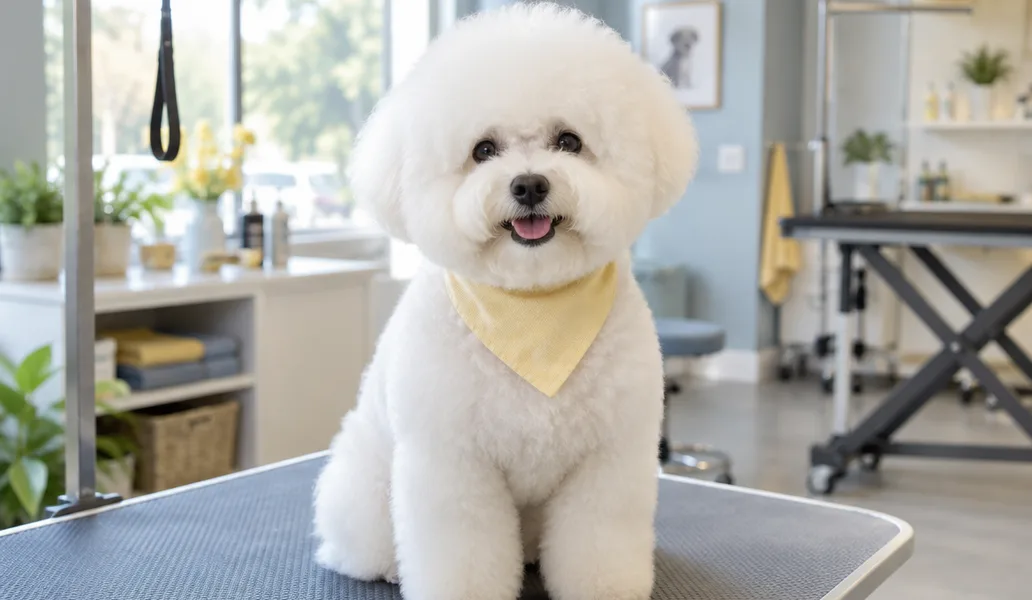
The first visit is fifteen minutes and there is barely a haircut in it. Table, handling, the sound of clippers running near but not on them, a little water, a little dryer, a lot of treats, and home. That is the whole point.
The three things to practise
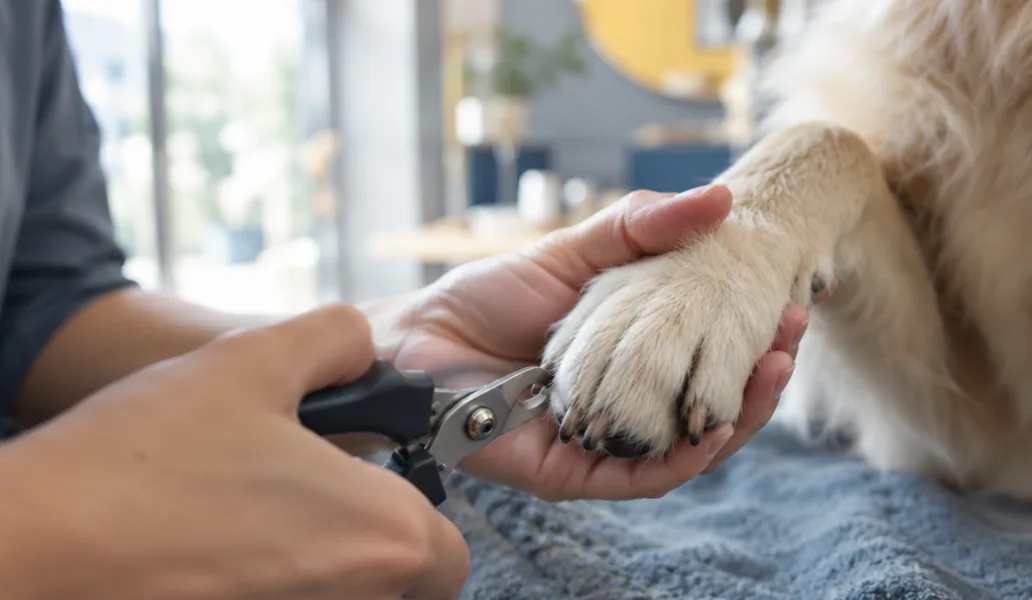
Feet. Hold a paw for two seconds, let go, treat. Build to ten. Most grooming trouble is foot trouble: a dog that objects to having its paws held turns nail trimming into a wrestle for the rest of its life.
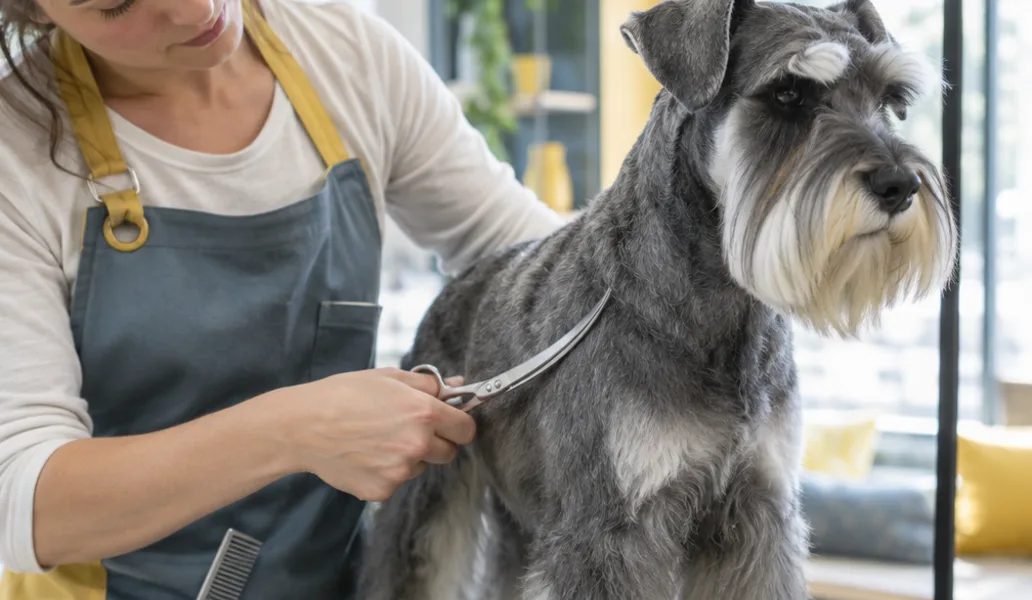
Face and ears. Hands around the muzzle, a finger lifting an ear, a comb near the eyes. Short, boring, rewarded.
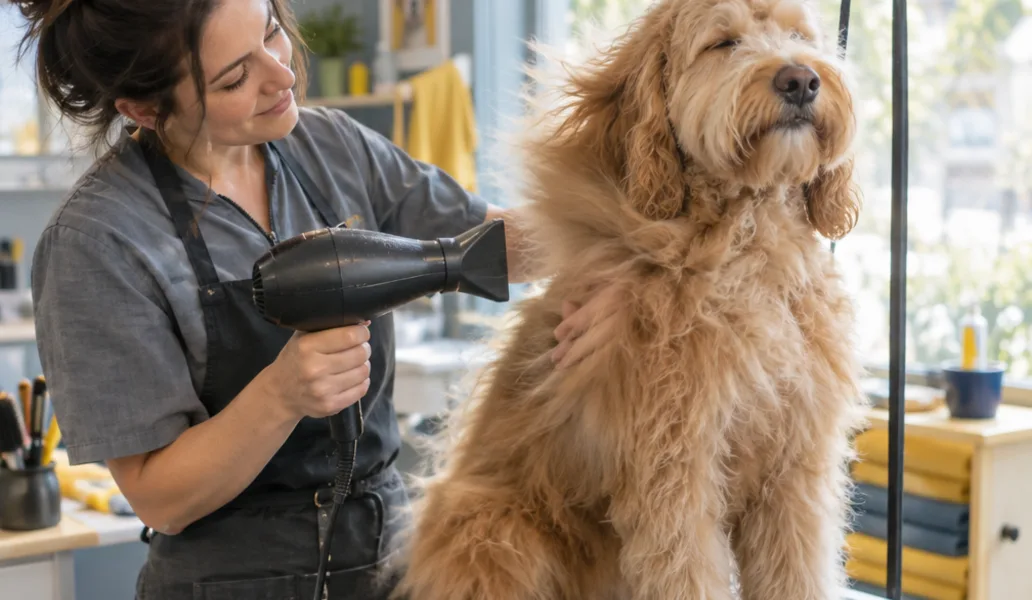
Noise and air. This is the one people skip. Run a hairdryer on cool, across the room, while your puppy eats. Move it closer over a fortnight. The high-velocity dryer we use is louder than anything in your house, and a puppy that has never felt moving air on its skin will panic the first time.
Brushing before it is needed
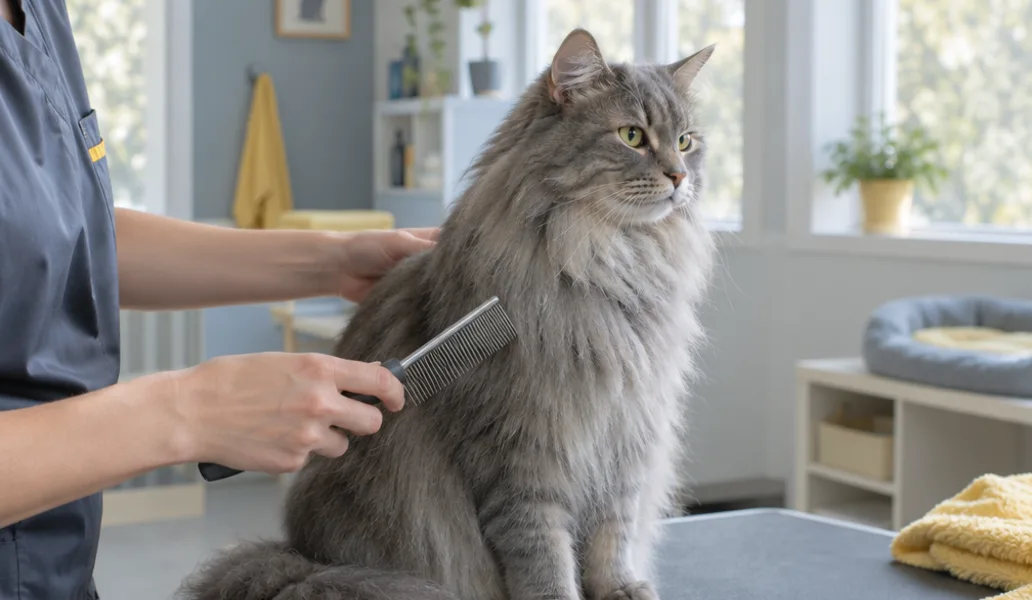
Brush a puppy coat that does not need brushing. A ten-week-old has no mats and nothing to fix, which is exactly why it is the right time to teach them that a comb going through their coat is a dull thing that happens and then stops.
What not to do
Do not apologise. Do not scoop them up and comfort them when they wobble on the table — it confirms that there was something to worry about. Hand them over, say something cheerful, and go. Dogs settle faster when their person leaves, every time, and we will text you when the coat is dry.