
Matting: what causes it and how to stay ahead of it
A mat is shed hair that could not fall out. It stays in the coat, rolls against itself every time the dog moves, and tightens. Left alone it pulls on the skin, traps damp, and stops air getting to what is underneath. By the time you can see it from across the room it has been there a fortnight.
Where they always start
Not on the back. Mats start where the coat rubs against something:
- behind and under the ears, where a collar and a head shake meet
- the armpits, on any dog that wears a harness
- the back legs and the base of the tail
- between the pads and up the back of the front legs
Those five places are where we look first, and they are the ones a slicker brush skims straight over.
Why a slicker is not enough
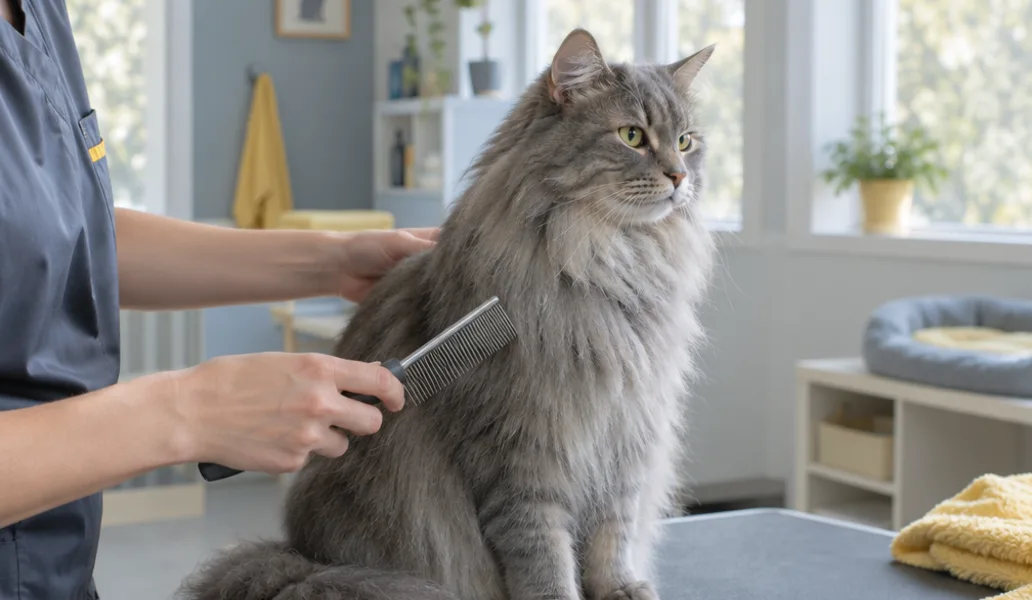
A slicker brush tidies the top of the coat. It is a comb that tells you the truth, because a comb has to pass through every layer or it stops. If you only own a slicker you will believe the coat is fine for about three weeks longer than it actually is.
The decision we will not make for you
If a coat is matted tight to the skin, there are two options: shave it short, or spend an hour pulling on the dog. We take the first every time.
Dematting a tight coat hurts. It leaves the skin red and sore, it takes far longer than the groom itself, and at the end you have a thin, damaged coat that mats again faster. We will work through light matting, and we charge for it by the quarter hour so you can decide how far to go. Past that, it comes off short, we tell you why, and the coat grows back in better condition than the one we took off.
A shaved dog looks odd for three weeks. A dematted one is sore for three days and remembers it for years.
The fortnight before a groom
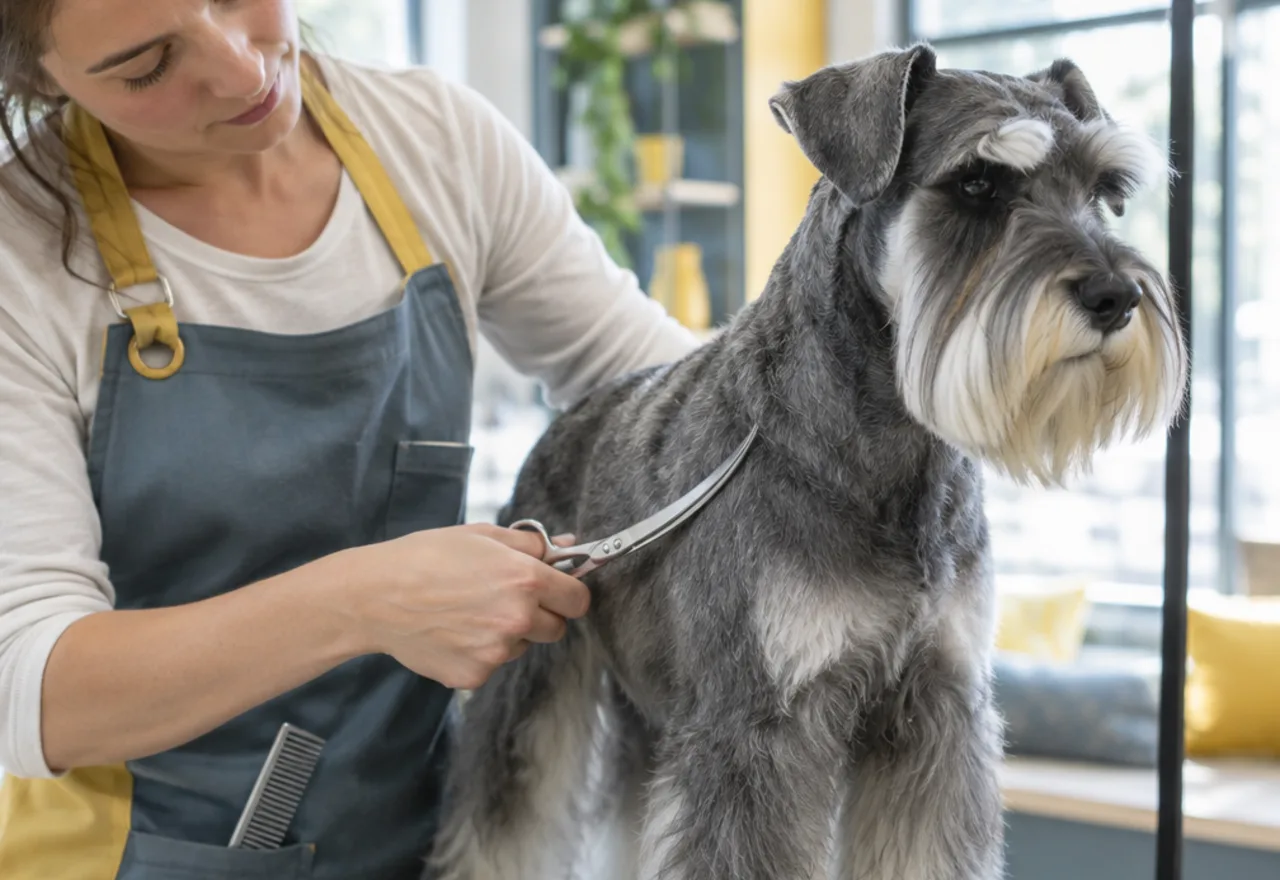
Comb, do not brush. Work in sections from the skin outwards. Do the five places above first, while you both still have patience. If you find a mat, do not wet it, do not oil it, and do not try to cut it out with scissors — the skin tents up into the blades more often than people think, and it is one of the more common injuries we see.
Just book in, and tell us when you call.